Showing posts with label Recipes. Show all posts

Monday, March 26, 2012

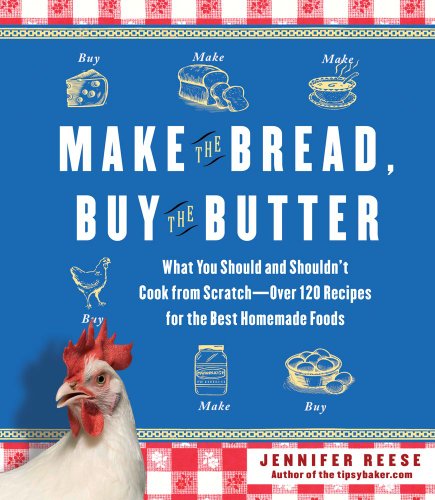
Make the Bread, Buy the Butter: What You Should and Shouldn't Cook from Scratch -- Over 120 Recipes for the Best Homemade Foods

Make the Bread, Buy the Butter: What You Should and Shouldn't Cook from Scratch -- Over 120 Recipes for the Best Homemade Foods Review


When Jennifer Reese lost her job, she was overcome by an impulse common among the recently unemployed: to economize by doing for herself what she had previously paid for. She had never before considered making her own peanut butter and pita bread, let alone curing her own prosciutto or raising turkeys. And though it sounded logical that “doing it yourself” would cost less, she had her doubts. So Reese began a series of kitchen-related experiments, taking into account the competing demands of everyday contemporary American family life as she answers some timely questions: When is homemade better? Cheaper? Are backyard eggs a more ethical choice than store-bought? Will grinding and stuffing your own sausage ruin your week? Is it possible to make an edible maraschino cherry? Some of Reese’s discoveries will surprise you: Although you should make your hot dog buns, guacamole, and yogurt, you should probably buy your hamburger buns, potato chips, and rice pudding. Tired? Buy your mayonnaise. Inspired? Make it.

With its fresh voice and delightful humor, Make the Bread, Buy the Butter gives 120 recipes with eminently practical yet deliciously fun “Make or buy” recommendations. Reese is relentlessly entertaining as she relates her food and animal husbandry adventures, which amuse and perplex as well as nourish and sustain her family. Her tales include living with a backyard full of cheerful chickens, muttering ducks, and adorable baby goats; countertops laden with lacto-fermenting pickles; and closets full of mellowing cheeses. Here’s the full picture of what is involved in a truly homemade life—with the good news that you shouldn’t try to make everything yourself—and how to get the most out of your time in the kitchen.


Wednesday, March 14, 2012

Organic Body Care Recipes: 175 Homeade Herbal Formulas for Glowing Skin & a Vibrant Self

Organic Body Care Recipes: 175 Homeade Herbal Formulas for Glowing Skin & a Vibrant Self Review


Radiantly healthy skin, hair, feet, hands, eyes, and nails. Commercial beauty products make this promise every day and live up to it with varying degrees of success. Stephanie Tourles offers a better solution to everyone frustrated with the endless cycle of expensive, synthetic, famous-name cosmetics that often fall short of expectations. Take control of beauty treatments with homemade products that use safe, nourishing ingredients to pamper the body and soothe the senses.

Tourles, a licensed esthetician, herbalist, and aromatherapist, has developed 175 recipes that are fun, simple, and immensely satisfying to make in home kitchens. Her natural beauty treatments deliver the results promised by department store brands — skin, hair, and nails that glow with vitality and inner wellness. Lotions, scrubs, toners, balms, and masks polish and balance the skin, soothe current problems, and prevent future ones. Shampoos, rinses, and conditioners tone the scalp, boost highlights, and leave hair soft and shiny. The book's whole-body coverage also includes recipes for hand and footcare, nail treatments, shaving cream, and even popular spa treatments such as microdermabrasion exfoliants, detox and cellulite soaks, ayurvedic oils, and herbal cold salves. Most important, there is never any doubt about the purity of these ingredients!

Each formula is clearly presented in recipe style, with notes on prep time, storage, and uses. Many products can be customized according to personal needs, whim, or mood, and they all use readily available, natural ingredients. Organic Body Care Recipes is a natural treasure for every body.


Wednesday, February 29, 2012

Indian Home Cooking: A Fresh Introduction to Indian Food, with More Than 150 Recipes

Indian Home Cooking: A Fresh Introduction to Indian Food, with More Than 150 Recipes Review


With its exotic aromas and complex flavors, Indian cuisine is one of the world's best. It's no wonder that so many people adore it--and also no surprise that it could seem daunting to cook Indian food at home. Now, acclaimed chef and cooking teacher Suvir Saran cuts out the fuss, sharing casual, home-style Indian dishes that are perfect for everyday cooking.

Indian Home Cooking is a celebration of the food Indians cook in American kitchens today, using ingredients found in most supermarkets. With streamlined techniques and intense, authentic flavors, Indian Home Cooking heralds a new generation of Indian cookbooks. From slow-simmered curries with layered flavors to quickly sautéed dishes, these approachable recipes explore the wide world of Indian cuisine, including:

*Irresistible snacks and appetizers, such as Puff Pastry Samosas with Green Peas, and Spinach-Potato Patties
*Seductively spiced lentil dals, from the North Indian classic flavored with whole cinnamon, cardamom, and cloves to a Southern Indian version with dried red chilies, mustard seeds, and curry leaves
*Aromatic meat and seafood curries, like Coconut Chicken with Cashews and spicy Goan Shrimp Balchao
*An incredible range of vegetable dishes, including Stir-Fried Green Beans with Cumin, and Cauliflower with Sautéed Green Peppers, Tomato, and Yogurt
*Easy, colorful chutneys and pickles to fill your pantry

Filled with gorgeous photographs, fresh flavors, and practical advice, Indian Home Cooking is an illuminating guide to real Indian food.


Wednesday, November 16, 2011

Martha Stewart's Cooking School: Lessons and Recipes for the Home Cook

Martha Stewart's Cooking School: Lessons and Recipes for the Home Cook Review
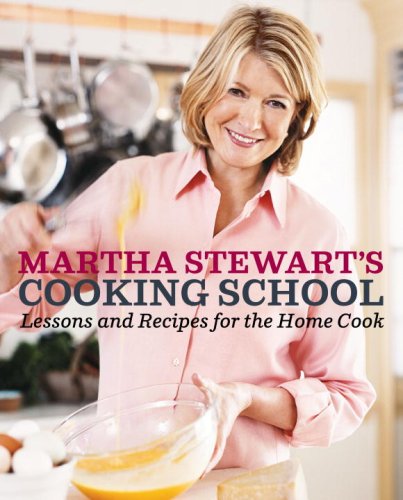


Martha Stewart's Cooking School: Lessons and Recipes for the Home Cook Feature

  • Hardcover
  • 512 pages
Book Description
Imagine having Martha Stewart at your side in the kitchen, teaching you how to hold a chef’s knife, select the very best ingredients, truss a chicken, make a perfect pot roast, prepare every vegetable, bake a flawless pie crust, and much more.

In Martha Stewart’s Cooking School, you get just that: a culinary master class from Martha herself, with lessons for home cooks of all levels.

Never before has Martha written a book quite like this one. Arranged by cooking technique, it’s aimed at teaching you how to cook, not simply what to cook. Delve in and soon you’ll be roasting, broiling, braising, stewing, sautéing, steaming, and poaching with confidence and competence. In addition to the techniques, you’ll find more than 200 sumptuous, all-new recipes that put the lessons to work, along with invaluable step-by-step photographs to take the guesswork out of cooking. You’ll also gain valuable insight into equipment, ingredients, and every other aspect of the kitchen to round out your culinary education.

Featuring more than 500 gorgeous color photographs, Martha Stewart’s Cooking School is the new gold standard for everyone who truly wants to know his or her way around the kitchen.

Martha Stewart's Prime Rib Roast

Prime rib, or standing rib roast, has long been a mainstay at the holiday table (where it is often paired with Yorkshire pudding, a British specialty made from the pan juices and a simple batter of flour, eggs, and milk). As it is expensive, prime rib should be handled with extra care. It is imperative that you have an instant-read thermometer for determining the internal temperature; if allowed to cook too long, the meat will no longer be a rosy pink inside, the optimal color for any high-quality roast. Remove the roast when still rare, as it will continue to cook as it rests, rising as much as 10 degrees in 20 minutes.

Rubbing meat (as well as chicken and fish) with herbs, spices, and a bit of oil will add tremendous flavor. Here, the beef is coated with a mixture of bay leaves, sage, and orange zest, all familiar holiday flavors. Allowing the meat to "marinate" in the rub overnight deepens the flavor even more. A similar result is achieved by simply salting the meat a day or two before roasting, whereby the salt will have penetrated the meat much like a brining solution.

Larger roasts such as prime rib, crown roast, and a whole turkey are started at a high temperature (450-degrees F) to sear the meat, then the temperature is lowered after 30 minutes to prevent the outside from burning before the meat is cooked through. The exterior won't develop a crust right away, but the initial high heat gives the outside a head start so that it will be perfectly browned in the end. --Martha Stewart

Prime Rib Roast


For Rub

15 dried bay leaves, crumbled
1/3 cup coarsely chopped fresh sage leaves, plus several whole leaves for garnish
1/2 cup extra--virgin olive oil
coarse salt and freshly ground pepper
1/3 cup finely grated orange zest (from 2 to 3 oranges)

For Roast
1 three-rib prime rib of beef (about 7 pounds), trimmed and frenched

Prepare Meat

Stir together crumbled bay leaves, sage, the oil, 1½ teaspoons salt, and the orange zest in a small bowl. Season with pepper. Rub herb mixture all over the beef, coating evenly. Refrigerate overnight, covered. About 2 hours before you plan to cook the beef, remove it from the refrigerator. Place beef, fat side up, in a roasting pan and allow it to come to room temperature. Meanwhile, heat the oven to 450-degrees F.

Roast

Cook beef for 30 minutes, then reduce temperature to 350-degrees F and continue roasting until an instant-read thermometer inserted into meat (away from bone) registers 115-degrees F to 120-degrees F (for rare), about 1 hour to 1 hour 15 minutes longer. Let rest 20 minutes.

Carve and Serve

Slice meat away from ribs, cutting along the bones. Then, slice meat crosswise to desired thickness. Serve, garnished with whole sage leaves.

Martha Stewart is the author of dozens of bestselling books on cooking, entertaining, gardening, weddings, and decorating. She is the host of The Martha Stewart Show, the Emmy-winning, daily national syndicated program, and founder of Martha Stewart Living Omnimedia, which publishes several magazines, including Martha Stewart Living; and produces Martha Stewart Living Radio, channel 112 on SIRIUS Satellite Radio.

Martha Stewart's Cooking School, Lessons and Recipes for the Home Cook By Martha Stewart"Imagine having Martha Stewart at your side in the kitchen, teaching you how to hold a chefÆs knife, select the very best ingredients, truss a chicken, make a perfect

Wednesday, June 29, 2011

Simply Natural Baby Food: Easy Recipes for Delicious Meals Your Infant and Toddler Will Love

Simply Natural Baby Food: Easy Recipes for Delicious Meals Your Infant and Toddler Will Love Review


When feeding babies, parents need to think outside the box—or the jar. Infants develop more rapidly in the first two years than they will in any other period of their lives. Over processed foods containing chemicals, preservatives, pesticide residue, and genetically engineered ingredients cannot nourish a growing baby. Infants need fresh, natural foods just like the rest of us.

Eating well can be easy, fun, and inexpensive. "Simply Natural Baby Food" gives you practical recipes to prepare whole foods that won’t tie you to the kitchen. Best of all, your children will learn good eating habits that will last a lifetime. There is a chapter for each stage of a baby’s eating development from first solid foods to fun recipes for toddlers. Tips are interspersed throughout the book to give the reader advice on cutting preparation time, helping baby to gain feeding independence, and getting maximum nutrition into baby’s meals.

The book contains detailed recipes for breakfasts, lunches, dinners, snacks, desserts, and beverages, including infant cereals, whole-grain crackers, sugar-free sweets, and non-diary nut and seed milks. Parents will appreciate the imaginative ways vegetables are incorporated into meals. For the child with allergies, many wheat-free, diary-free, and egg-free recipes have been included. "Simply Natural Baby Food" promotes a plant-based diet. Fresh fruits and vegetables, whole grains, legumes, sea vegetables, nuts and seeds are emphasized. There are recipes containing dairy products, fish, and poultry because, eaten in moderation, these foods contain important nutrients, but vegetarian and vegan alternatives are provided for virtually every recipe.

Find out how easy it is to prepare your own baby food. You'll save money and give your child the best possible start.